Land Cleared Without Destroying What's Beneath
Forestry Mulching in Augusta for overgrown hunting land, trails, and rural lots requiring vegetation management
Wooded properties throughout Georgia and South Carolina accumulate dense undergrowth, invasive species, and standing deadwood that limits land usability and increases wildfire risk. Forestry mulching addresses these conditions by grinding vegetation in place rather than cutting, piling, and burning material that disturbs soil structure and creates erosion vulnerabilities. The process leaves a layer of organic mulch that suppresses regrowth, retains soil moisture, and decomposes to improve soil quality over time.
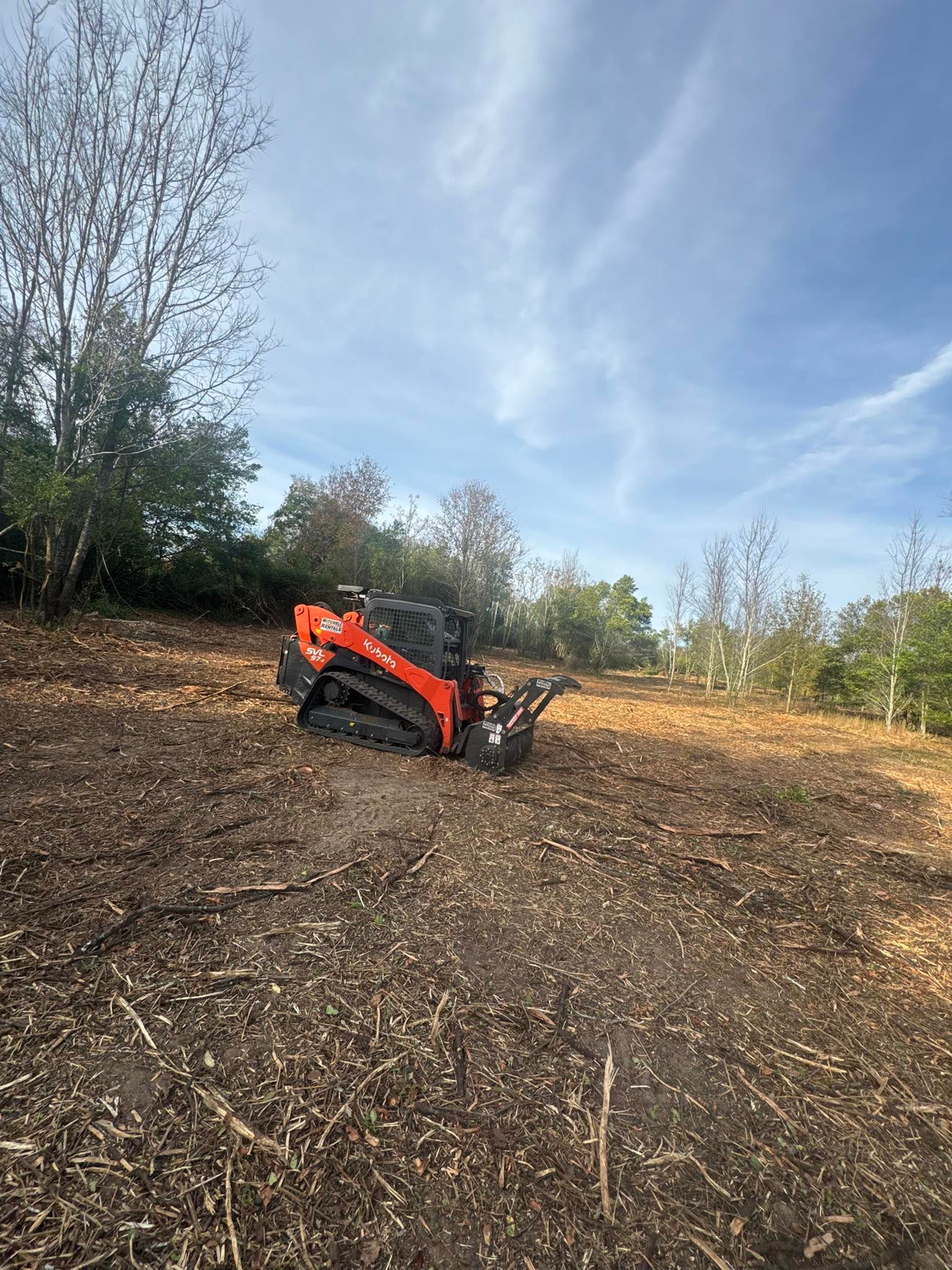
Mulching equipment uses rotating drums with carbide teeth to shred trees up to several inches in diameter, brush, saplings, and vines into chips distributed across the clearing area. The method avoids topsoil removal, preserves root systems that stabilize slopes, and eliminates burn permits or debris hauling that add cost and delay to traditional clearing. Brocato Land Care operates professional mulching equipment designed for efficient vegetation management with minimal ground disturbance.
Schedule a forestry mulching consultation to evaluate vegetation density and discuss clearing goals for your property.
Completed mulching projects produce cleared sight lines for hunting, accessible trails through previously impassable areas, and maintained lot boundaries that define property lines and reduce encroachment from adjacent overgrowth. The mulch layer left behind acts as erosion control on slopes where exposed soil would wash during rain, while also creating a weed barrier that slows invasive species reestablishment compared to bare ground after traditional clearing.
Property owners notice improved access for equipment and vehicles, reduced tick and pest habitat around structures, and enhanced land value from usable acreage rather than unusable thickets. Wildlife movement patterns shift as new browse growth emerges through the mulch layer, creating edge habitat favorable for deer and turkey while reducing cover for feral hogs and coyotes.
Mulching works best for vegetation management and land improvement rather than full site preparation for construction—stump grinding or excavation may be necessary where ground-level clearing to mineral soil is required. Seasonal timing affects regrowth rates, with late-season clearing reducing the energy available for sprouting compared to spring cuts that stimulate aggressive resprouting.
Answers to Frequent Mulching Questions
Forestry mulching raises questions about environmental impact, regrowth management, and how the process compares to conventional land clearing methods.
What size trees can forestry mulching equipment handle?
Most mulching heads effectively process trees up to six or eight inches in diameter depending on wood hardness and equipment specifications, while larger timber requires felling and separate processing or removal.
How does mulching reduce erosion compared to traditional clearing?
Mulch left on-site protects soil from raindrop impact, slows runoff velocity across slopes, and maintains organic matter that improves water infiltration—traditional methods expose bare soil vulnerable to gully formation during storms.
Will vegetation grow back after mulching?
Regrowth depends on species cleared and root system health—hardwoods often resprout from stumps while the mulch layer suppresses seed germination and makes follow-up maintenance easier than managing bare ground covered in new seedlings.
When is the best time to schedule mulching work?
Late fall through winter offers advantages in Augusta's climate because reduced sap flow limits resprouting energy, ground conditions support equipment access without rutting, and visibility through dormant canopy improves operator efficiency.
What's the difference between mulching and bush hogging?
Bush hogging cuts vegetation at ground level leaving stumps and debris requiring separate removal, while mulching grinds material into chips processed in place without creating piles or requiring burn permits.
Brocato Land Care provides reliable scheduling and efficient equipment operation for forestry mulching projects across rural and residential properties. Reach out to discuss vegetation conditions and clearing objectives specific to your land management goals.