Ground Moved to Solve Real Problems
Pond and Excavation Work in Augusta for drainage improvements, property development, and land functionality projects
Heavy equipment projects throughout the Augusta region address drainage failures, pond construction for livestock water or recreation, and site development where grading changes land use from unusable to functional. Excavation services from Brocato Land Care handle trenching for utility installation, pond shaping that balances cut and fill volumes, and drainage channel creation where runoff patterns cause erosion or flooding. Rural properties often require excavation to improve access roads, create level building pads, or reshape swales that direct water away from structures.
Pond excavation involves stripping topsoil for later redistribution, shaping basins with side slopes stable enough to resist slumping, and compacting core trench material where earthen dams impound water. Depth affects whether ponds maintain water levels during summer droughts—shallow basins lose volume to evaporation and seepage while deeper excavations reach groundwater tables that sustain year-round levels. Careful planning during excavation prevents costly rework when finished grades don't drain properly or ponds fail to hold water due to permeable subsoil.
Discuss excavation goals with Brocato Land Care to review site conditions and equipment requirements for your project scope.
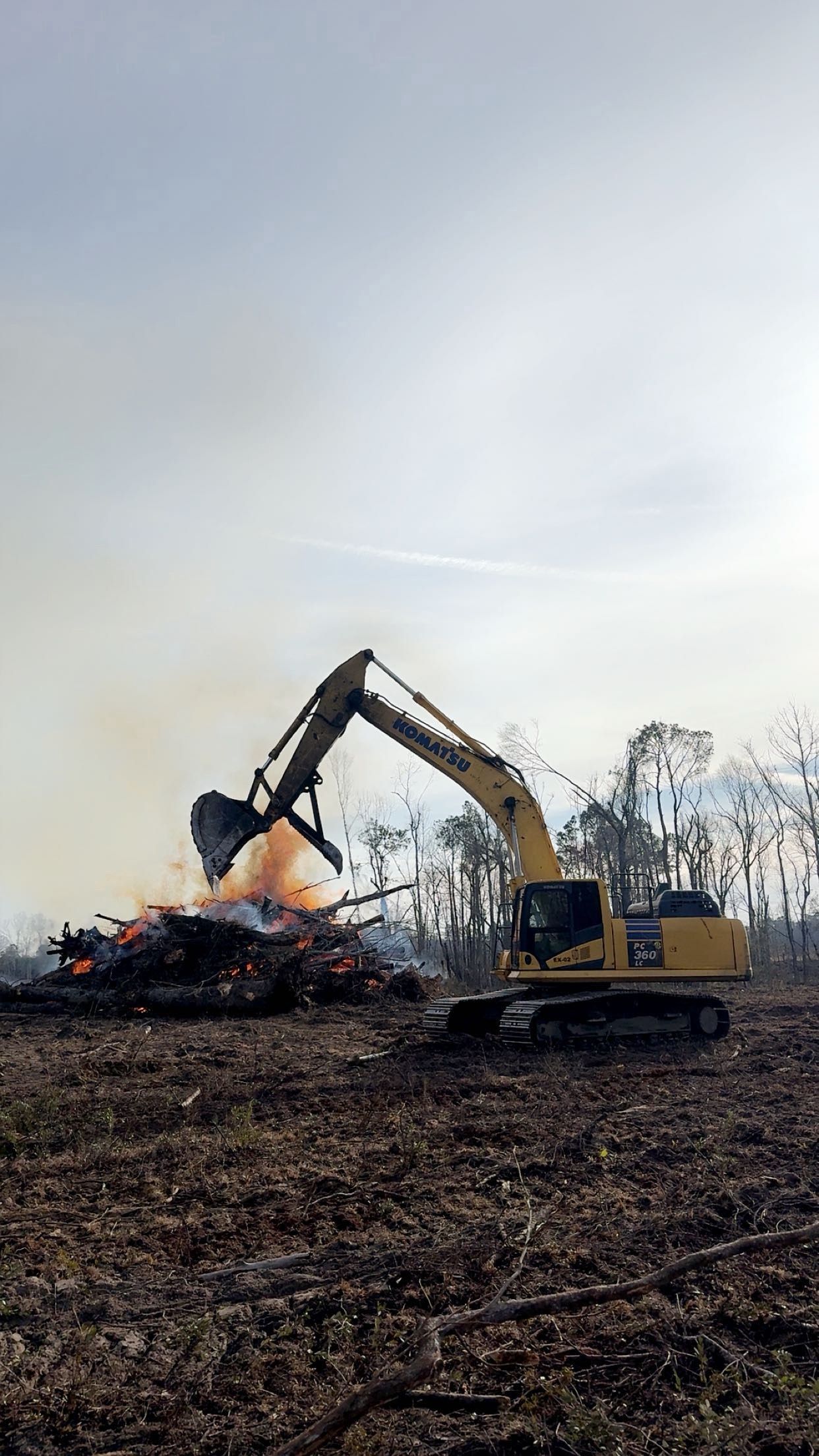
Excavation projects succeed when operators understand soil behavior, drainage mechanics, and how finished grades affect long-term site performance. Site assessment identifies rock layers that require different equipment, high groundwater that complicates trenching, or soil types that compact well versus materials needing stabilization before use as structural fill. Equipment selection matches project scale—track hoes handle precise trenching and pond shaping while dozers move larger volumes for rough grading.
Completed excavation work produces functional drainage that moves water during storms without eroding channels, ponds that fill and maintain levels suitable for intended use, and graded surfaces that support structures or vehicle traffic without settling. Property owners notice elimination of standing water problems, improved land access where previous conditions prevented equipment movement, and enhanced property value from usable acreage.
Projects may include topsoil stockpiling for later redistribution, installation of overflow structures to prevent pond dam failure, or creation of berms and swales that manage stormwater without requiring underground piping. Licensed and insured service ensures operators follow safety protocols and site-specific requirements throughout excavation work.
What Property Owners Want to Know
Excavation questions typically focus on project planning, soil conditions common to the region, and how finished work performs under actual site conditions.
What determines whether a pond will hold water?
Water retention depends on subsoil permeability—clay layers create natural seals while sandy or gravelly soils require bentonite application or synthetic liners to prevent seepage losses that drain ponds seasonally.
How deep should a pond be for year-round water?
Depth requirements vary by climate and groundwater levels, but excavating at least eight to ten feet in the deepest section helps ponds in Augusta maintain volume during summer droughts when evaporation and stock water use reduce levels.
Why does proper grading matter for drainage projects?
Grading establishes slope and direction that control where water flows—inadequate slope leaves standing water while excessive slope creates erosion, so achieving design grades during excavation prevents performance problems after construction finishes.
When should excavation be scheduled to avoid wet conditions?
Late summer through fall typically offers drier soil conditions in the Augusta area that support equipment access and reduce mud issues, while winter and spring rains can delay projects or create rutting damage requiring additional site restoration.
What's included in a free excavation estimate?
Estimates involve site inspection to assess soil conditions and access constraints, equipment requirement evaluation based on project scope, and recommendation development that outlines approach, material handling, and factors affecting cost.
Brocato Land Care operates professional excavation equipment and maintains clear communication throughout project planning and execution. Free estimates are available for property owners ready to address drainage, pond construction, or land development needs.