Drainage Solutions That Stop Water Damage
Grading in Augusta for properties with erosion, uneven terrain, and water runoff problems
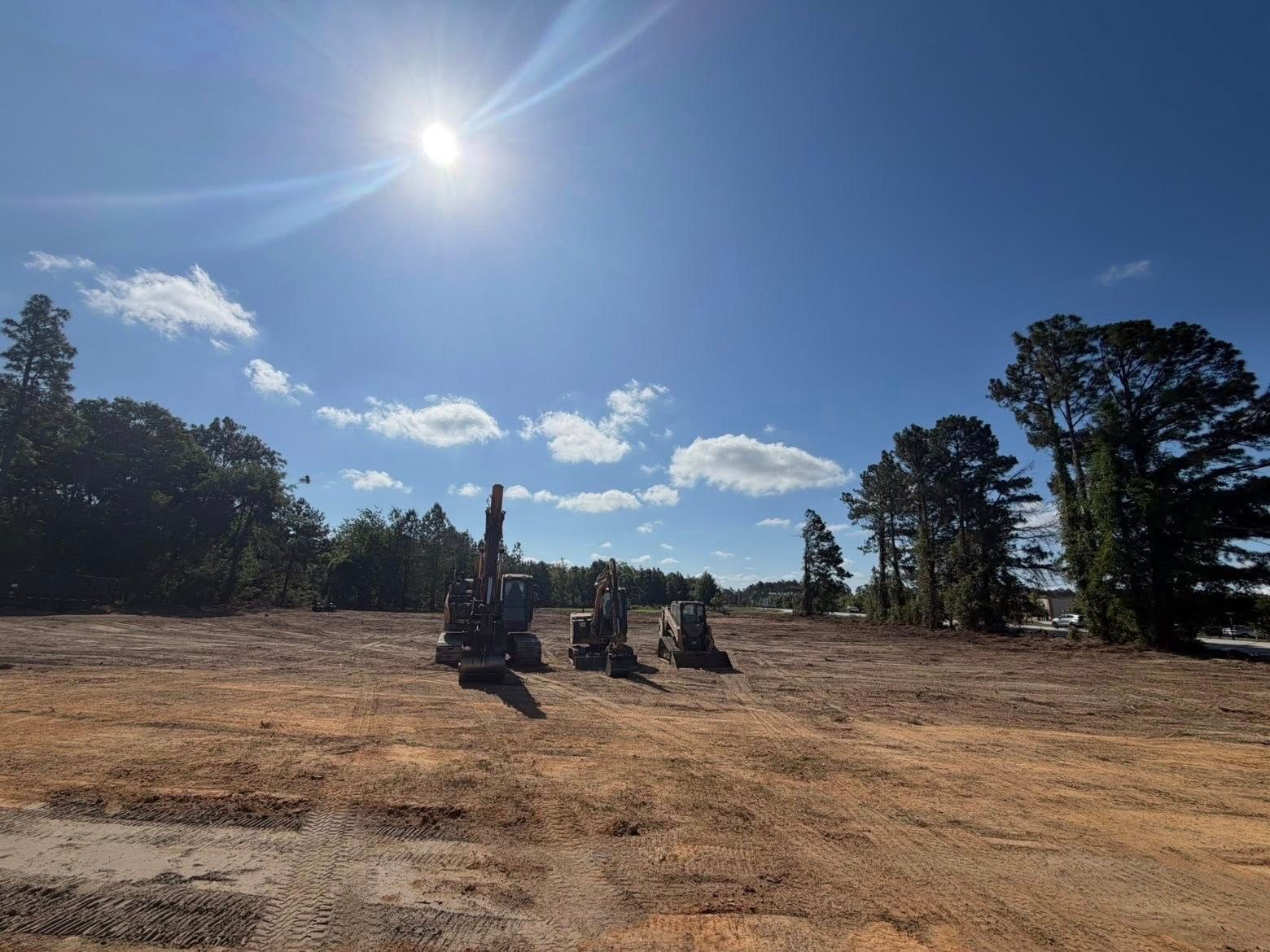
Water pools near foundations, driveways crack from undermining, and yards erode into gullies when land slopes incorrectly or lacks defined drainage paths. Grading work reshapes terrain to direct water away from structures and prevent soil loss, using precision equipment to establish slopes that function correctly during heavy rain events common throughout Augusta. Once grading is finished, runoff follows predictable paths away from buildings, and erosion stops in areas where soil previously washed away during storms.
The process involves cutting high spots, filling low areas, and sloping surfaces to direct water toward drainage points or natural swales. Equipment operators adjust grades in small increments to match drainage plans while preserving existing features like trees or utility locations that must remain undisturbed.
Request a grading evaluation to identify drainage concerns and discuss slope corrections for your property.
Properly graded sites show visible water movement during rain, with runoff flowing along planned routes rather than pooling in random low spots. Equipment operators use laser levels and grade stakes to achieve slopes between one and three percent, steep enough to move water efficiently but gentle enough to prevent erosive flow velocities.
After completion, previously soggy areas near the house dry out between rain events, driveways stop settling in sections where water used to collect, and outdoor spaces become usable year-round instead of turning to mud after storms. The work also prepares sites for landscaping, as plants establish better on properly drained ground than in areas where water sits.
Some projects require only finish grading to correct minor drainage issues, while others involve significant cut-and-fill work to address severe slope problems or prepare sites for construction. Clean job site practices ensure that excess soil is either redistributed on-site where useful or hauled away rather than left in piles that interfere with drainage or future work.
Answers to Frequent Service Questions
Residential and rural property owners across the Augusta area typically ask about drainage improvement methods, project timelines, and how grading integrates with other site work.
What causes water to pool near foundations?
Insufficient slope away from the house, settled backfill along foundation walls, or low spots created during construction allow water to collect rather than drain, which grading corrects by re-establishing proper slopes.
How much slope is needed for effective drainage?
Most residential grading establishes slopes between one and three percent, which translates to a one- to three-inch drop per ten feet of horizontal distance.
When is grading done relative to other landscaping work?
Grading typically happens before landscape installation so that plants, sod, and hardscaping go onto properly sloped surfaces that won't require rework after the first heavy rain.
What equipment is used for residential grading projects?
Skid steers and compact track loaders handle most residential lots, offering maneuverability in tight spaces while providing the power needed to move soil and achieve precise grades.
How does grading prevent erosion on sloped properties?
Controlled slopes and defined drainage paths reduce water velocity across the surface, and properly compacted soil resists the scouring action that creates gullies and washes out landscaping.
Brocato Land Care addresses drainage and erosion problems across Augusta-area properties with efficient project completion and attention to site-specific conditions. Reach out to discuss grading solutions and schedule an on-site assessment of your property's current drainage patterns.